FAUNA, MORPHOLOGY AND SYSTEMATICS OF PARASITES
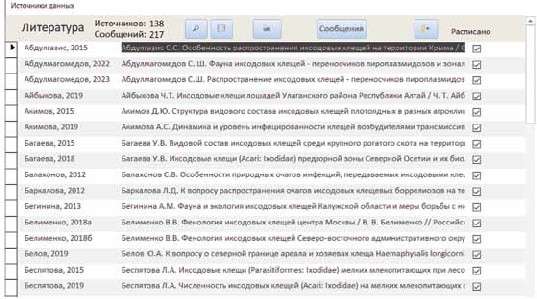
The purpose of the research is to develop software for collecting and summarizing literature data on the distribution of ixodid tick species and, based on this data, to create a database of tick findings in Russia.
Materials and methods. The data used for this study were published in scientific articles. The computer database (DB) and its user interface are implemented in MS Access. The necessary software components are implemented in VBA modules.
Results and discussion. A program was developed with an initial push-button form that allows entering data into the database or obtaining information about existing information. A form for entering and editing literary sources and a message description form are available for entering data from literary sources. Data on infeсtion (infeсtion prevalence, %) for each tick species and the species' share of the total collection (dominance index, %) are recorded. In addition to its core, the database structure includes external tables (for example, a list of ixodid tick species and a list of administrative territorial units of Russia). The program functions as a standalone application. The database contains information on 66 ixodid tick species from 138 literature sources: 21 species of the genus Ixodes, 12 species of the genus Haemaphysalis, 10 species of the genus Hyalomma, 9 species of the genus Dermacentor, 7 species of the genus Rhipicephalus, 2 species of the genus Boophilus, 2 species of the genus Amblyomma, and 1 species of the genus Anomalohimalaja. The species with the greatest number of registration reports are Ixodes persulcatus (89 literature sources), Dermacentor reticulatus (71), I. ricinus (62), and D. marginatus (71). The distribution of the species in 48 regions of Russia is shown.
BIOLOGY AND ECOLOGY OF PARASITES
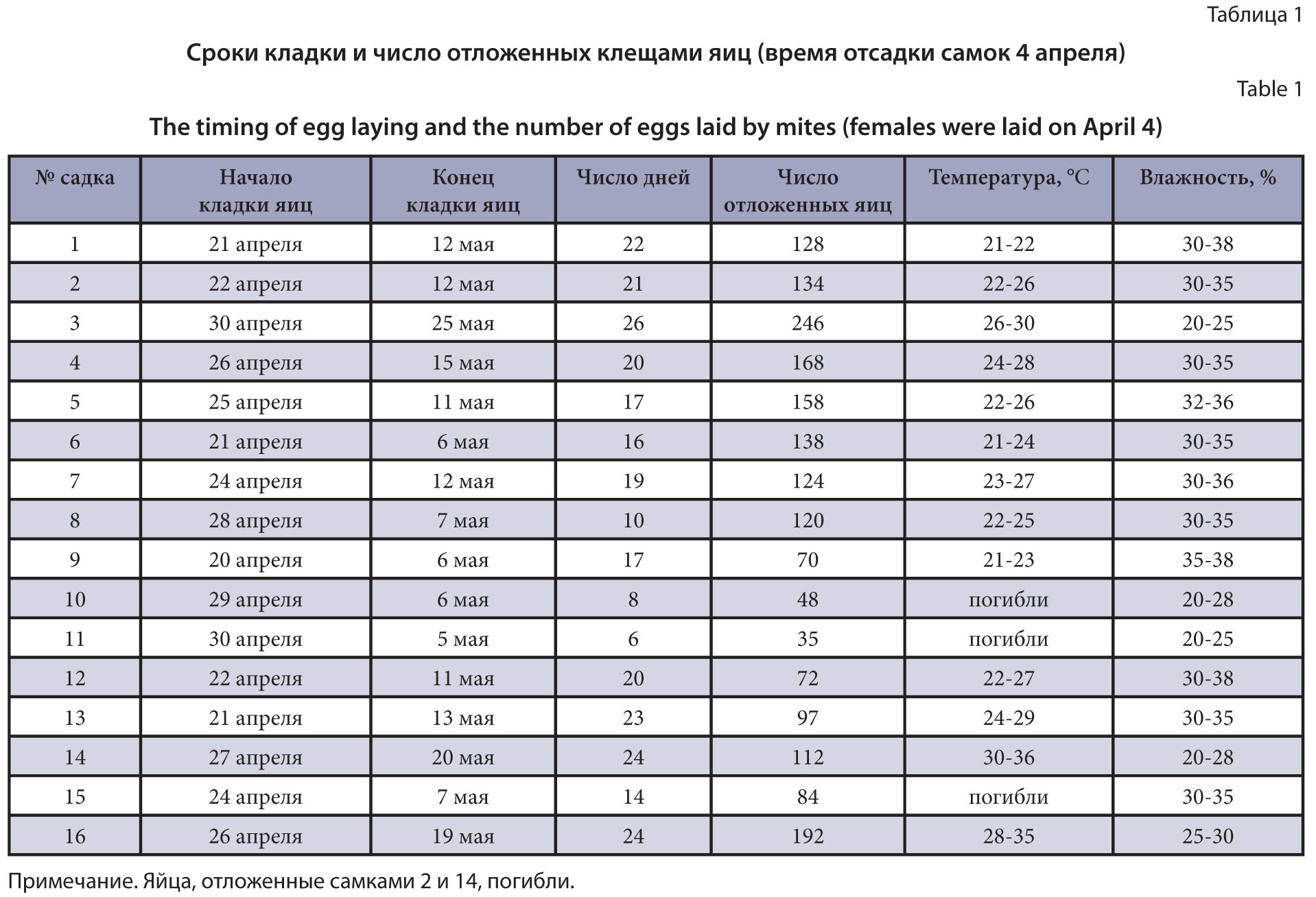
The purpose of the research is to investigate biological characteristics of Argas persicus in natural environment of Central Tajikistan.
Materials and methods. The study was conducted in 2017–2018 in the Parasitology Department of the E. N. Pavlovsky Institute of Zoology and Parasitology, on the former Sharifzoda poultry farm in the Faizabad District and the Kholboboev Makhbub poultry farm in the Baljuvon District. A. persicus ticks were collected from poultry buildings and wild bird nests on March 10, 2017. Experiments were conducted on 10 young domestic chickens aged approximately 5 months. The M. G. Zhdanova method (1948) was used to obtain eggs and to feed A. persicus larvae and nymphae.
Results and discussion. Our experiments took 59 to 157 days to develop one generation of A. persicus ticks, excluding the time for females to prepare and lay eggs. However, the time required for preparation and egg laying must be considered. Subject to this period (22–54 days), tick development continues for 81 to 209 days (or 3 to 7 months) in our conditions. Our data indicate that the average A. persicus development period is 145 days, i.e. one generation of ticks can develop during the warm season. However, if metamorphosis occurs in the shortest time (81 days), two generations may develop.
EPIZOOTOLOGY, EPIDEMIOLOGY AND MONITORING OF PARASITIC DISEASES
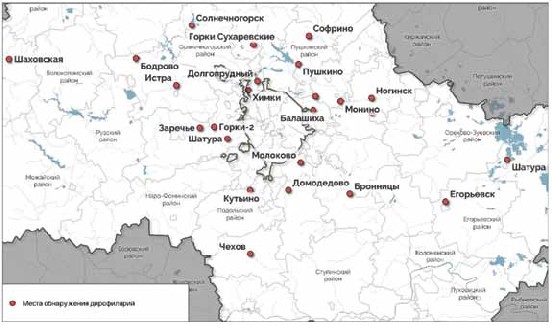
The purpose of the research is to assess the current distribution of the nematode Dirofilaria repens in the Northwestern (NWFD) and Central (CFD) Federal Districts of Russia using molecular genetic methods.
Materials and methods. A single-center retrospective study was conducted. A total of 4,431 whole blood samples from dogs collected in various locations were analyzed using a species-specific polymerase chain reaction (PCR).
Results and discussion. D. repens DNA was detected in 7.69% (341/4,431) of the analyzed samples. The parasite was detected in 19 of the 26 regions studied. The PCR confirmed D. repens for the first time in 13 regions of the Russian Federation that were not previously considered endemic, including the Arkhangelsk, Kaliningrad, Pskov, Novgorod, Tambov, Lipetsk, Yaroslavl, Tver, Bryansk, Ivanovo, Kaluga, Ryazan, and Tula Regions. The highest infection prevalence (IP) was recorded in the Ivanovo Region (63.9 ), the Kursk Region (50.0%), and the Pskov Region (46.7%). Previously known endemic foci such as the Belgorod Region (IP = 18.6%) and the Voronezh Region (IP = 17.1%) also showed positive results. The obtained data indicate a significant expansion of the D. repens range in northern and northwestern directions across European Russia. A significant limitation of the study was the inability to completely rule out cases of imported infection due to the lack of data on animal displacements. Furthermore, targeted sampling from animals clinically suspected of having dirofilariasis may have led to an overestimation of prevalence estimates. Nevertheless, the high proportion of positive samples in regions with representative sampling clearly indicates active local pathogen transmission in most of the studied areas.
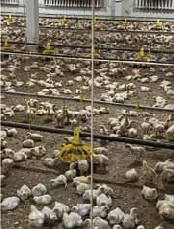
The purpose of the research is to study the epizootic situation of eimeriosis in broiler chickens with litterless and littercontaining technologies of their rearing at a broiler farm by age and season of the year with modern complex bioprotection against eimeriosis of broiler chickens with disinfection of premises and equipment with a test agent containing 1.0% glutaraldehyde, 7.0% glyoxal, a mixture of QAC (Quaternary Ammonium Compounds) 25.0%.
Materials and methods. The epizootic situation with Eimeria spp. infection in broiler chickens was also studied. The study was conducted at a poultry farm in the Northwestern Federal District of Russia using litterless and litter-based broiler chicken rearing technologies. Eimeria infection in broiler chickens was studied using the Fulleborn and Darling coproscopy methods (GOST 25383–82), in different seasons of the year by examining up to 20 droppings samples for each rearing technology for chickens of the following age groups: 10–11; 21–22 and 35 days. At the end of technological cycles in litterless and littered systems of growing broiler chickens, the infection of young broiler chickens with Eimeria spp. was studied in the most critical periods in terms of biosecurity: in winter – from January to February; in spring – from March to April and in the autumn-winter period October-December in 2024–2025. In the course of the work, the extensive infection (EI) and intensity infection (II) of Eimeria spp. in chickens of different ages, the intensity efficacy and economic efficiency per 1 ruble of the costs of the applied disinfection with the studied preparation with a special agent containing glutaraldehyde 1.0%, glyoxal 7.0%, a mixture of quaternary ammonium compounds 25.0% in a 5.0% concentration during a sanitary break and the prescription of the coccidiostatic agent salinomycin 12.0%. Along with the above, nematodes and arthropods (if present) were considered.
Results and discussion. On a poultry farm with litterless rearing technology, the EI of coccidia by Emeria spp. was significantly lower in the first three weeks of life of broiler chickens at different times of the year, remaining at 20.0% and 35.0%, respectively. By 35 days of age, the EI of Emeria spp. in houses with litter and litterless rearing technologies increased to 65.0–70.0% and 100%, respectively. The II also increased in both groups during the first observation period in winter and spring, reaching 3.3–17.7 thousand and 3.1–7.8 thousand Emeria spp. per gram of feces. During the second stage of observations in the autumn and winter periods of 2024–2025, the intensity infection with the litterless rearing technology was the lowest throughout the entire period of broiler rearing and amounted to 2.6–4.3 thousand Emeria spp. oocysts per gram of feces in the first 3 weeks of life and an average of 10.8 thousand specimens at 35 days. The II was determined to be low in the second stage of the research.
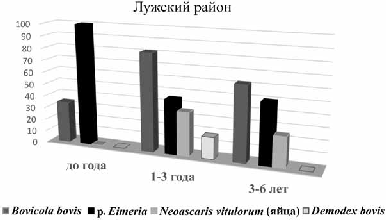
The purpose of the research is to analyze an epizootic situation on bovine parasitosis at peasant farm enterprises of the Leningrad and Pskov Regions.
Materials and methods. The study was conducted at the V. L. Yakimov Department of Parasitology at the St. Petersburg State University of Veterinary Medicine. The epizootic situation on infectious diseases was assessed at peasant farm enterprises in the Leningrad and Pskov Regions. A total of 370 cattle aged 6 months to 6 years were examined. To diagnose helminthiasis, fecal samples were collected and analyzed by the Darling method using a universal flotation fluid and the Berman-Orlov method. A helminth genus was determined based on the morphological structure of the eggs and larvae. Ectoparasitosis was diagnosed visually and by examining skin and hair scrapings which were microscoped at ×40 and ×100 magnification. Parasite genera were determined based on morphological characteristics, and the infection prevalence was determined from the number of infected animals to the total population on the farm. The infection intensity was calculated from the number of parasites detected in the infected animals.
Results and discussion. Cattle kept at peasant farm enterprises were infected with Eimeria, nematodes, and stationary ectoparasites such as Acariform mites and chewing lice. A high percentage of animals were infested with Bovicola bovis on all farms. On a farm in the Luzhsky District, up to 81% of animals were infected with this insect species, and demodicosis was also diagnosed. High infections of Chorioptes bovis mites were observed at peasant farm enterprises in the Lomonosovsky District of the Leningrad Region and the Pskov District of the Pskov Region. On farms in the Lomonosovsky and Pskov Districts, chorioptosis was diagnosed in all cows. On all farms, Eimeria oocysts were found in young animals aged six months to one year. At peasant farm enterprises in the Luzhsky and Pskovsky Districts, the infection rate of animals of this age was 100%. Infection rates decreased with age but the oocyst excretion persisted across all age groups. Neoascaridosis was diagnosed in cows at peasant farm enterprises in the Luzhsky District, and strongyloidosis was diagnosed in cows at peasant farm enterprises in the Lomonosovsky District. These findings indicate the need to revise existing treatment and prevention regimens for infective diseases at peasant farm enterprises.
BIOCHEMISTRY, BIOTECHNOLOGY AND DIAGNOSTICS
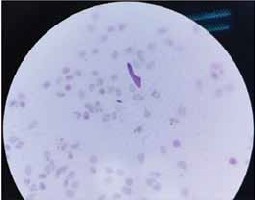
The purpose of the research is to analyze current diagnostic methods for canine babesiosis and differentiate it from other blood-borne diseases.
Materials and methods. The study was based on long-term literature data, which was analyzed and summarized, highlighting methods for the intravital diagnosis of canine babesiosis.
Results and discussion. Canine babesiosis is a highly prevalent, transmissible hemoprotozoan disease transmitted by ixodid ticks and found worldwide. In dogs, the primary vectors of babesiosis are ticks of the genera Rhipicephalus, Dermatocentor, and Haemaphysalis. Babesiosis is caused by single-celled protozoa of round, oval, pear-shaped, or amoeboid shapes. These organisms are transmitted by tick bites. They parasitize within red blood cells (a single red blood cell can contain from 1 to 32 individuals), blood plasma, neutrophils, and can also be found in parenchymal organs. The most common complications include hemolytic anemia, thrombocytopenia, renal and hepatic failure, and exacerbation of chronic diseases. The disease can be acute, chronic, or subclinical. The incubation period ranges from 3 to 21 days. With the subclinical form, periodic exacerbations are possible. Symptoms may depend on the severity of the disease. The most common symptoms in the acute stage include fever, lethargy, pale or icteric mucous membranes, dark urine, and anorexia. Blood tests reveal splenomegaly and hepatomegaly, and anemia, thrombocytopenia, and monocytosis are noted. Blood smear microscopy, PCR testing, and ELISA diagnostics are used to confirm the disease.
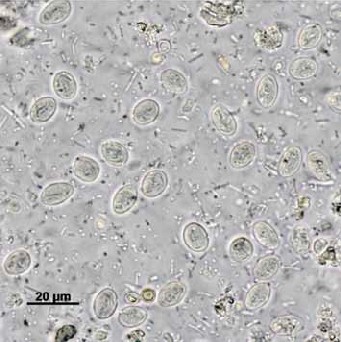
The purpose of the research is to genetically characterize Giardia duodenalis isolates from dogs in the city of Moscow (Russia).
Materials and methods. A total of 423 fecal samples from dogs were investigated for G. duodenalis cysts in 2025. Twentyfive isolates were detected, 19 of which were characterized. Genetic analysis was performed based on the β-giardin locus which is 569–581 base pairs long. The obtained sequences were compared with reference sequences in the GenBank database.
Results and discussion. In the present study, for the first time, genotyping of G. duodenalis isolates obtained from domestic dogs in Moscow (Russia) was carried out. Assemblage C was identified in 15.8% of dogs (n = 3/19), assemblage D in 68.4% of dogs (n = 13/19) and three isolates were found to be mixed C and D in 15.8% (n = 3/19). The study revealed the presence of dog-specific assemblages of G. duodenalis that are not zoonotic. However, it is possible that dogs may have other Giardia assemblages, so further studies with a larger number of isolates are needed.
The purpose of the research is to analyze the literature on gamma-aminobutyric acid (GABA) as a potential inhibitory neurotransmitter in the nervous system of plant-parasitic nematodes, its detection and localization in neural structures, its main functions, and potential applications for plant protection.
Among several neurotransmitters, GABA, the main inhibitory neurotransmitter in the nervous system of vertebrates and invertebrates, is of great interest to researchers. A literature review revealed that all components of the GABAergic nervous system, which regulates nematode motor activity, are found in the nervous structures of parasitic plant nematodes. This is confirmed by immunocytochemical data, which demonstrates the presence of GABA in the nervous system of plant nematodes, and by pharmacological data on the response of nematode muscles to GABA agonists and antagonists. Of particular interest are the ontogenetic changes in the GABAergic nervous system of sedentary parasitic nematodes associated with their loss of motility. The identification of one of the components of the GABA receptor ion channel structure –the UNC-49B subunit – and its pharmacological properties in zoo-, plant-, and free-living nematodes indicates the conservatism of the GABAergic nervous system across various representatives of the phylum Nematoda, independent of their roundworm lifestyle. One of the promising directions in plant protection may be the induction of GABA in plants, since they are widely represented in higher plants. Increased GABA content in transgenic tobacco lines reduced plant infestation by the northern root-knot nematode.
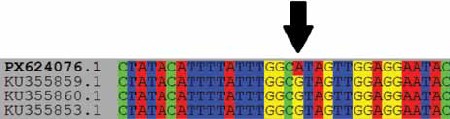
The purpose of the research is to study the taxonomic affiliation and haplotypic diversity of trichinella isolates circulating in the Voronezh Nature Reserve and adjacent territories of the Central Chernozem region using modern molecular genetic methods and data from the International Information Database (NCBI).
Materials and methods. The larvae of Trichinella nativa isolated from frozen muscle tissue of wild and domestic animals were used as the studied material. The material was collected from those who died in the Voronezh Nature Reserve and in adjacent territories during regulatory measures and regulated hunting, as a result of poaching and those who died on highways. Muscle tissue samples from wild and domestic predatory mammals with diagnosed trichinella infestation were also used, recorded in 70% ethanol and 10% formalin. Native DNA was isolated from the obtained larvae, followed by Multiplex PCR (MT PCR) for primary species identification. The native DNA samples identified by MT PCR were amplified with primers 37F_Tri and 42R_Tri to study the mt DNA fragment of cytochrome C oxidase subunit 1 (cox1). The obtained amplicons were sequenced by Sanger and deposited in the GenBank NCBI international database.
Results and discussion. The presented results of molecular genetic studies confirm the previously presented data on the taxonomic affiliation of Trichinella – T. nativa (Romashov et al., 2006). Bioinformatics analysis of four deposited nucleotide sequences showed the presence of three single-nucleotide substitutions in the cox1 gene region of T. nativa. The two substitutions are synonymous and do not affect the process of transcription and subsequent translation, since in both cases the same amino acid, valine, is encoded. However, there is a single nucleotide substitution at position 67 in T. nativa (a sample from a common lynx, GenBank №PX624076) leads to the encoding of another amino acid, methionine, which can significantly affect protein biosynthesis and, as a result, alter the physiological properties of the parasite.
TREATMENT AND PREVENTION
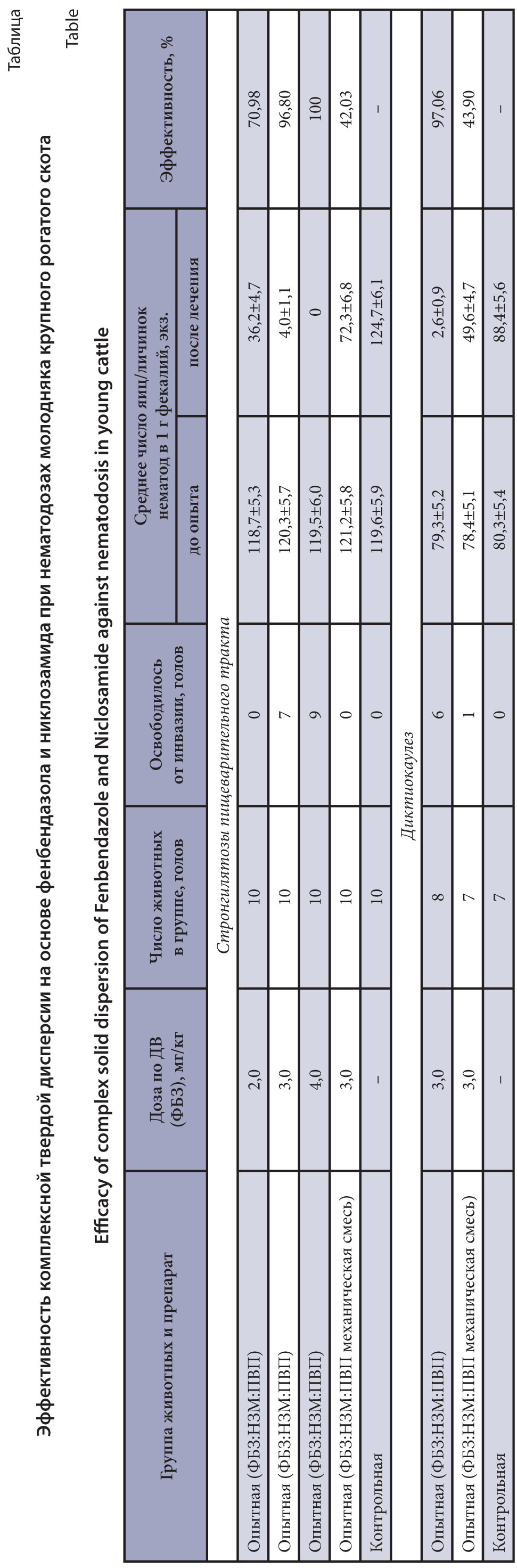
The purpose of the research is to study the anthelmintic efficacy of a complex solid dispersion based on Fenbendazole and Niclosamide against gastrointestinal strongylatosis and dictyocaulosis in young cattle.
Materials and methods. A complex solid dispersion was obtained by combined mechanochemical processing of FBZ, NZM, and polyvinylpyrrolidone (PVP) substances (2 : 20 : 78) in an LE-101 roller mill using previously developed technique. Anthelmintic activity was studied on 50 heifers naturally infected with gastrointestinal strongylates and on 22 heifers naturally infected with dictyocaulosis. The animals with strongylatosis were divided into 5 groups. A single dose of the complex solid dispersion was administered orally to the heifers of the 1st, 2nd, and 3rd experimental groups at doses of 2.0; 3.0, and 4.0 mg/kg, respectively, according to FBZ. Animals of the 4th experimental group received a mechanical mixture of FBZ, NZM, and PVP in the same ratio at a dose of 3.0 mg/kg according to FBZ. The 5th group received no treatment and served as controls. The animals naturally infected with dictyocaulosis were divided into three groups of 7–8 animals each. The 1st group of heifers received a solid dispersion orally at a dose of 3.0 mg/kg of FBZ. A mechanical mixture of FBZ, NZM, and PVP was administered to the animals of 2nd group at the same dose. The 3rd group served as controls and was not treated. The efficacy of the drugs was evaluated according to the results of coproscopic studies by the flotation method and the Berman method before and 13 days after drugs administration according to the "control test".
Results and discussion. The solid dispersion of FBZ, NZM with PVP showed 100, 96.8, and 70.9% efficacy, against gastrointestinal strongylatosis at doses of 4.0, 3.0, and 2.0 mg/kg according to FBZ respectively, versus 42.0% activity of the basic mixture. The solid dispersion demonstrated 97.0% effect against dictyocaulosis at a dose of 3.0 mg/kg according to FBZ, and the mechanical mixture exhibited 43.9% activity at the same dose.
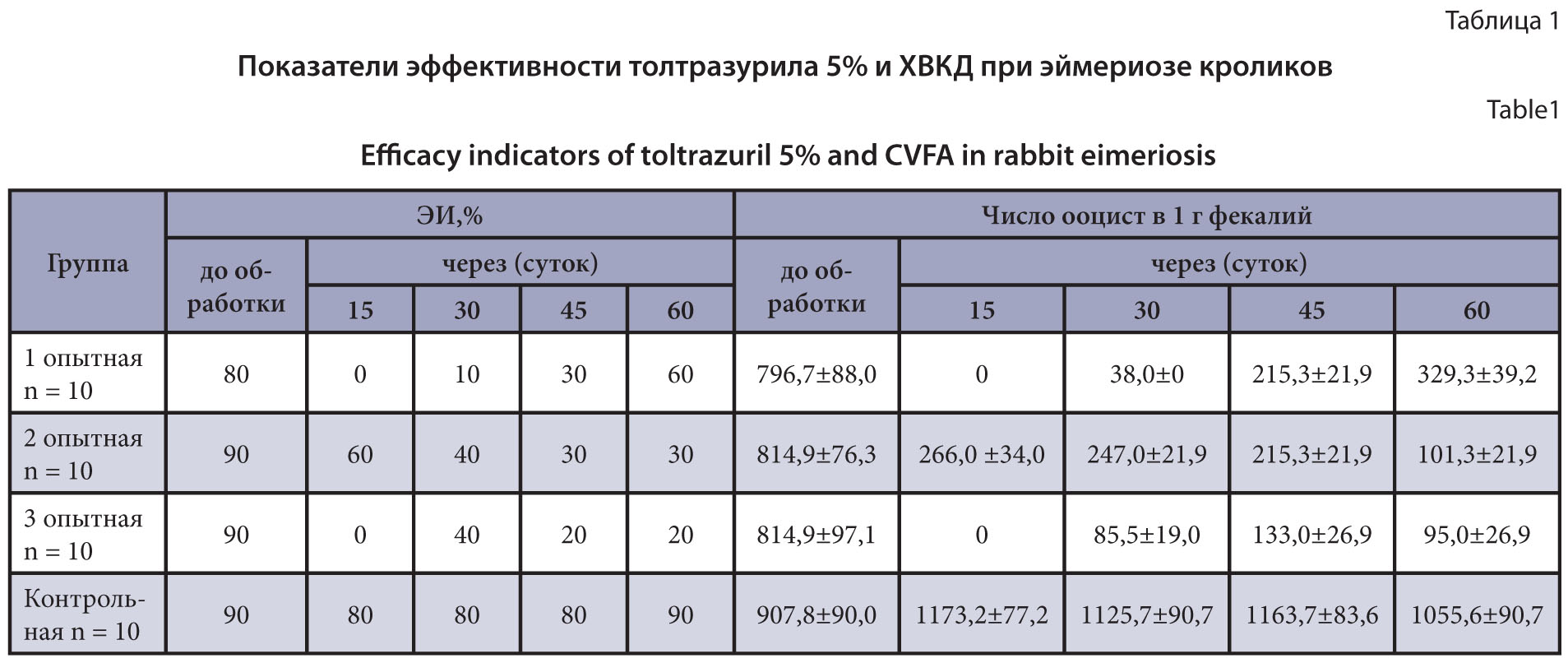
The purpose of the research is to determine therapeutic efficacy of the combined use of a toltrazuril anticoccidial agent and a conifer-vitamin feed supplement against eimeriosis in rabbits.
Materials and methods. An experiment was conducted at a vivarium to determine therapeutic efficacy of the combined use of a toltrazuril anticoccidial agent and a conifer-vitamin feed supplement against eimeriosis in rabbits. Toltrazuril 5% Suspension was administered orally, individually, at a single dose of 0.14 mL/kg of body weight, and a conifer-vitamin feed supplement containing glycerin extract of Scots pine tree greens, linseed cake, bran, sugar, and vitamins A, D3, and E was administered at a dose of 4.0 mL per animal with feed by a group method, daily, for 2 months, as drugs for eimeriosis treatment. To diagnose the disease (infection rate analysis) and monitor drug efficacy, feces analysis for oocysts in rabbits was performed. During the experiment, the animals' health was assessed, livestock survival rates were calculated, and average daily weight gains were monitored.
Results and discussion. The experiment results demonstrated the high efficacy of Toltrazuril 5% Suspension combined with the conifer-vitamin feed supplement to treat eimeriosis in rabbits. The absolute and average daily live weight gains for the group averaged 510 and 8.5 g, respectively, which is higher than in the other experimental groups and the control.

The purpose of the research is to evaluate therapeutic efficacy of various Monensin 20% administration regimens against natural eimeriosis in calves in the Vologda Region.
Materials and methods. The study was conducted on 40 Black-and-White calves aged 2-3 months with confirmed eimeriosis in May-June 2025. The animals were randomized into two groups: Group 1 was given the drug at a dose of 125 mg/animal/day (for the active substance) with feed for 3 weeks; Group 2 was given the same dose for 4 weeks. The efficacy was assessed based on the dynamics of the clinical condition and parasitological parameters (infection prevalence and intensity) on days 0, 10, 20, 30, and 40 using the McMaster technique.
Results and discussion. The 4-week Monensin 20% course was found to provide a significantly more pronounced and stable clinical and parasitological effect as compared to the 3-week course. The 4-week treatment group showed a 93.8% reduction in infection intensity by day 30 (P < 0.001) along with the completely eliminated pathogen in 20 % of the animals and a prolonged aftereffect after the drug withdrawal. The critical period for maximum efficacy was between days 20 and 30 of the therapy. The drug was well tolerated with no side effects and contributed to the restoration of production performance. Thus, the 4-week Monensin 20% treatment regimen was highly effective against eimeriosis in the calves and can be recommended for implementation in the veterinary control system at dairy units.

The purpose of the research is to evaluate clinical efficacy and safety of electrolyzed water (anolyte and catholyte) in the treatment of parasitic dermatitis in carnivores.
Materials and methods. The study involved 15 dogs and 15 cats diagnosed with parasitic dermatitis of various degrees of severity. After etiotropic antiparasitic therapy, the animals were divided into experimental and control groups. In the experimental group, anolyte (an acid solution with bactericidal properties) and catholyte (an alkaline solution that stimulates regeneration) were used for wound cleaning and applications. The control group used standard antiseptic solutions (chlorhexidine, furacilin, etc.). Healing dynamics were assessed: inflammation severity, presence of exudate, granulation, epithelialization, and complete skin restoration time.
Results and discussion. In the animals from the experimental groups, statistically significant acceleration was observed for wound clearance from fibrinous deposits and necrotic tissue with anolyte. Subsequent use of catholyte induced active granulation and marginal epithelialization. Overall healing times for lesions in experimental groups were reduced by an average of 20–30% versus the control. No signs of irritation, allergic reactions, or toxic effects were detected.
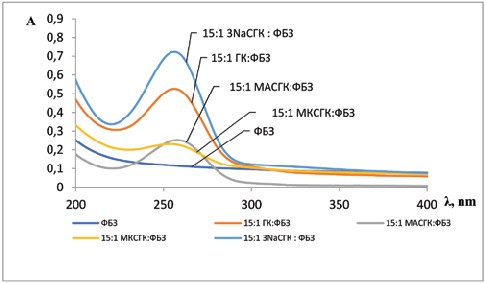
The purpose of the research is obtaining experimental samples of fenbendazole (FBZ) by alternative methods: dissolution and mechanochemistry and comparative evaluation of their physicochemical and anthelmintic properties.
Materials and methods. Experimental FBZ samples with glycyrrhizic acid and its derivatives were obtained in an ethanol medium using dissolution or solid-phase mechanochemistry. The solubility of FBZ samples was evaluated by the method of high-performance liquid chromatography, and other physicochemical properties were studied using UV- and IR-spectroscopy. The biological activity of the obtained samples was determined on the laboratory model of experimental trichinellosis of white mice based on the results of intestinal necropsy. The efficacy was calculated using a "control test".
Results and discussion. Varying degrees of increase in solubility of FBZ samples obtained with different salts and methods were established: from 0.1 to 9.7 times. IR and UV spectral data confirmed the stabilization of FBZ samples obtained by the liquid-phase method due to intermolecular hydrogen bonds. In this study, no obvious correlation was observed between the solubility and efficacy of the obtained FBZ samples. The samples obtained by the solid-phase method demonstrated the highest activity against trichinellosis, in particular, the FBZ sample with uccinic, alkaline and citric acids (72.1%) and FBZ sample with Na2GA (62.8%) at a dose of 3.0 mg/kg of active substance. Samples of supramolecular FBZ with salts, obtained by the liquid-phase method, showed an increase in efficacy by 1.8–3.6 times compared to the basic drug – FBZ substance at a dose of 3.0 mg/kg of active substance.
OUR ANNIVERSARIES

ISSN 2541-7843 (Online)